From Chaos to Cosmos – Ancient Words for a Living Planet
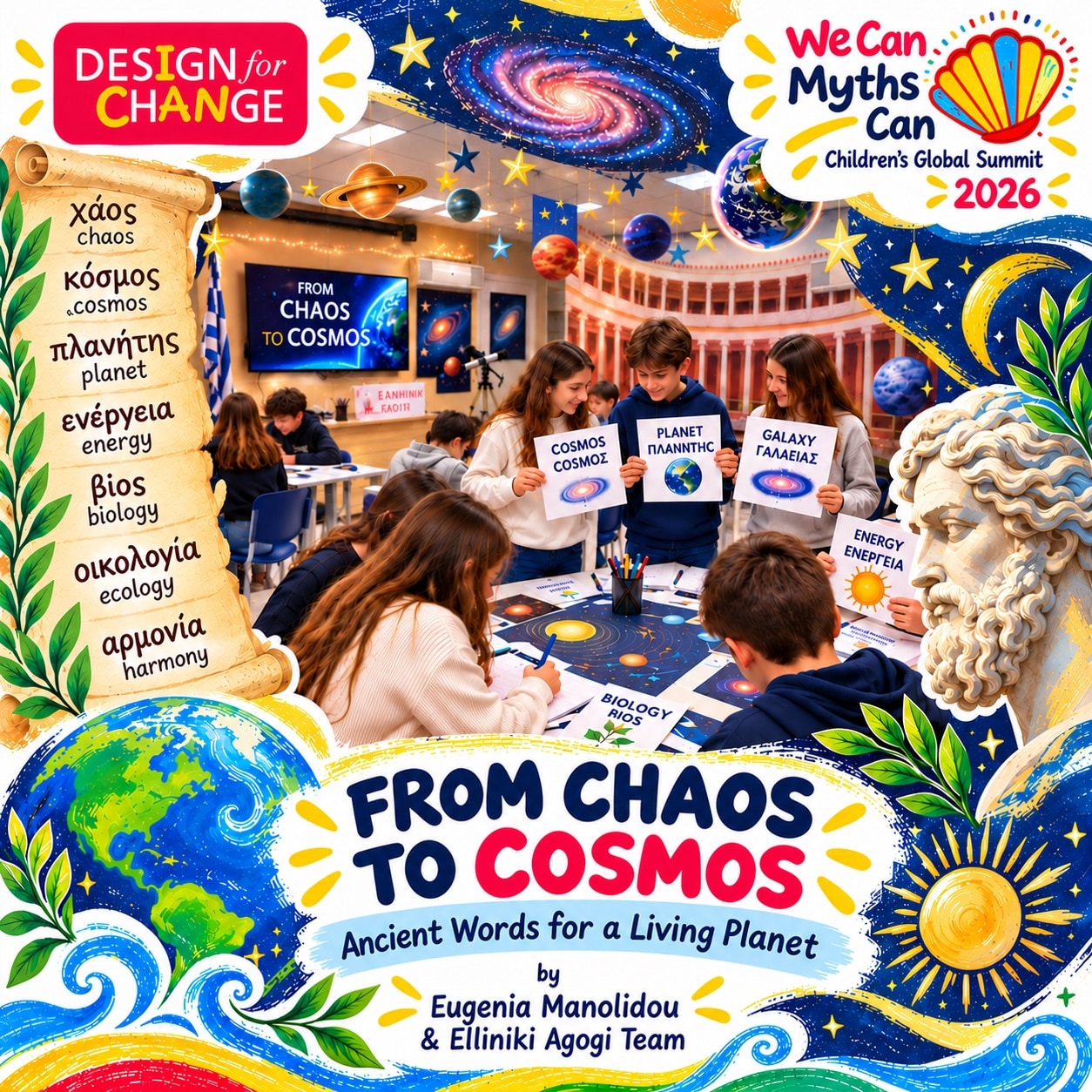
What do chaos, cosmos, planet, energy, biology, ecology and harmony have in common?
Inspired by Hesiod’s Theogony, this interactive workshop invites children to explore how Ancient Greek words and ideas continue to shape the way we understand our planet today.
Beginning with a dynamic three-minute performance, participants will journey from Chaos to Cosmos and discover the Greek origins hidden inside familiar international words connected with nature, science and the environment.
They will then work in teams, solve language challenges and explore how the different elements of our natural world depend on one another. Their final challenge will be to “rebuild the Cosmos” together and consider what each of us can do to protect the planet we share.
At the end of the workshop, participants will be invited to become Geonauts: young explorers who understand, respect and care for the Earth.
Words You Already Know – an interactive language challenge
Discover the Greek Connection – team-based word exploration
Our Living Planet – collaborative activities connecting language, nature and the environment
Rebuild the Cosmos – teams create and contribute their part of a shared planet
Share the Cosmos – teams present their discoveries and ideas
Become a Geonaut – final challenge and closing
What Participants Will Take Away
Participants will discover the Ancient Greek origins of familiar international words, experience Ancient Greek as a living source of modern vocabulary, explore the connections between language, mythology and the natural world, and work collaboratively on a contemporary environmental challenge.
Most importantly, they will leave with a simple idea: ancient words can still help us think about the future.